
Farstar Agents

Overview
Farstar Agents was founded in 2024 by Samuel Camarata with a bold vision: to create a virtual universe where diverse AI agents live, interact, and evolve, much like the Marvel Universe or League of Legends lore.
Our first chapter in this story is to build a Companion AI Agent platform—an application that accompanies users in their daily lives, intelligently tracks their activities, understands their context, and interacts in ways that feel natural, engaging, and personal.






Disclaimer
Some assets shown here were part of publicly released marketing materials by FarStar Agents.
These materials were publicly available at the time of documentation and are presented solely for illustrative and portfolio purposes. The design mockups are for demonstration only — the final implementation on the website and product may differ in appearance due to technical constraints, browser variations, or ongoing design updates.
Role
-
Staff Product Designer | May 2025 - Mar 2026
Responsibility
-
Defining & Ideating
-
Prototyping & Iterating
-
Branding, Web & Product Design
Tools
Figma, Webflow, Notion
Duration
3 months

Empathy
Where the Journey Began
Project Engagement

Where the Journey Began
When the CEO, Samuel Camarata, found me on LinkedIn, the company had already been developing the product for almost a year. There were some foundational model studies and early ideas in place, but no marketing and no public application. The team was in urgent need of a product designer with hands-on experience in AI applications.
At that time, AI agent development was booming, with new intelligent agents emerging everywhere. The Farstar Agent product had a strong connection to gaming, which reminded me of my work at Wingman.
As a dedicated gamer who spends at least two hours a day playing, and someone deeply interested in AI agent development, I immediately felt a strong connection with the project — and decided to join the team.


Project
Engagement
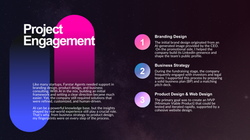
Like many startups, Farstar Agents needed support in branding design, product design, and business consulting. With AI in the mix, building an initial framework and setting a clear direction became much easier. Yet, the company still required solutions that were refined, customized, and human-driven.
AI can be a powerful knowledge base, but the insights shaped by real-world experience still play a crucial role. That’s why, from business strategy to product design, my fingerprints were on every step of the process.
1 / Branding Design
The initial brand design originated from an AI-generated image provided by the CEO. On the promotional side, I helped the company build its LinkedIn presence and shape the team’s public profile.
2 / Business Strategy
During the fundraising stage, the company frequently engaged with investors and legal teams. I supported this process by preparing a solid business plan (BP) and a matching pitch deck.
3 / Product Design & Web Design
The primary goal was to create an MVP (Minimum Viable Product) that could be tested and iterated rapidly, supported by a cohesive website design.

Define
Pain Point
Competitor reseach
User Personas
Problem statement
Refined Voice from the Founder
The idea for this project first came to the founder during a hospital stay, where playing games and chatting with AI became a source of comfort. That personal experience sparked the vision—but turning it into a product for the market requires much deeper research into the true pain points.
For the founder, understanding user needs defines the baseline of product design. Once a project begins commercialization, it’s no longer only about the idea. It means studying the industry, the market, and the users—then analyzing how big the opportunity is, and how far the project can go.

Pain Points with AI Agents
What’s Missing in AI Agent Experiences
Today’s AI companionship is limited
Most AI agents today primarily rely on web and mobile interfaces, which fit well into everyday productivity and lifestyle scenarios. However, outside of these environments, the user experience of a typical AI agent app feels almost identical to the web version, offering little differentiation.
As a result, once the interface disappears, the agent itself becomes practically invisible to the user.
Functional, Not Relational
Even when given a persona, AI agents offer only a limited sense of personality—functioning more as tools that respond to prompts than as true companions. Ultimately, the experience depends heavily on how users choose to interact and the specific scenario.
The real challenge—and opportunity—for this industry is enabling agents to provide continuous companionship across different contexts.
Pain Points in Gaming
The Challenges Players Encounter in Games
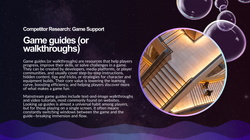
Game guides and skill improvement
Progressing through levels has always been at the heart of gaming. Tutorials help players pick up the basics, but the real magic comes from hidden features and Easter eggs—these secrets keep communities engaged and make games endlessly exciting.
The challenge is that searching for guides takes time and often breaks immersion. That’s why giving players quick, seamless access to tips and strategies is such a valuable opportunity.
Gaming requires just the right kind of companionship
Gaming is also a social experience, but the way players choose to connect—how to socialize, with whom, and when—changes from moment to moment. These decisions happen quickly, depending on the type of game and the player’s own intent. For AI agents, this means companionship must feel light, flexible, and personal.
Players should be able to decide effortlessly when the agent joins in, ensuring support and interaction always feel natural rather than forced.
Competitor Research
From Companionship to Gaming Experience
 |  |  |  |  |  |
|---|---|---|---|---|---|
 |
Persona
From Casual Users to Hardcore Gamers

Aaron Loeb
Casual Explorer
Looking for an AI agent that can provide lasting companionship.

Lena Fischer
New Learner
Looking for seamless guidance to progress smoothly through levels.

Claudia Alves
Game Streamer
Looking for smart assistance to generate commentary ideas or keep the stream engaging.

Chris Patel
Hardcore Gamer
Looking for real-time strategy and advanced tips to gain a competitive edge.
 |  |  |  |
|---|
Problem Statement
How might we design an AI agent application that supports different types of users—offering lasting companionship, seamless guidance, and competitive insights—while staying lightweight, customizable, and unobtrusive to the core user experience?

Ideate
Roadmap
Project Scope
Design Challenges

Product
Roadmap
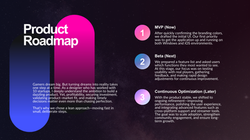
Gamers dream big. But turning dreams into reality takes one step at a time. As a designer who has worked with 10 startups, I deeply understand the ambition to build a dazzling product. Yet, profitability, securing investment, validating product–market fit, and making timely decisions matter even more than chasing perfection.
That’s why we chose a lean approach—moving fast in small, deliberate steps.
1 / MVP (Now)
After quickly confirming the branding colors, we drafted the initial UI. Our first priority was to get the application up and running on both Windows and iOS environments.
2 / Beta (Next)
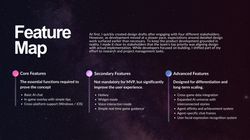
We prepared a feature list and asked users which functions they most wanted to see. At this stage, our focus was on testing usability with real players, gathering feedback, and making rapid design adjustments for continuous improvement.
3 / Continuous Optimization (Later)
With the product stable, we shifted to ongoing refinement—improving performance, polishing the user experience, and integrating advanced features such as cross-platform support and streamer tools. The goal was to scale adoption, strengthen community engagement, and ensure long-term growth.
%20Chen%20-%20FSA%20Design%20Process%20(1).png)
Project Scope
Where Do We Draw the Line for the MVP?
In Scope
-
Core application running on Windows and iOS environments
-
Basic companion AI functionality: chat, simple context awareness, and lightweight interactions
-
Ability to switch between Application Mode and Overlay Mode
-
Branding integration (logo, color palette, primary typography) User onboarding flow and simple account setup
Out of Scope
-
Mobile browser and Android versions
-
Widget mode
-
Advanced personalization (agent affinity system, achievements, stickers, etc.)
-
Multi-agent universe features (expanded the worldbuilding and storytelling)
-
Marketplace, monetization, or subscription management
-
Deep integrations with external platforms

Challenges
Navigating from 0 to 1 is filled with challenges,
and I'm committed to finding a path that aligns with the organization.
 |  |  |  |
|---|

Prototype
FSA Branding
Web Design
Application Prototype

FSA Branding
Shaping Identity Through Color
Exploring the brand started with understanding the team’s vision. The keywords the team provided included modern, playful/gamified, and neon-inspired.
In addition, I noticed that the team’s AI agent illustrations carried a strong metallic aesthetic. This meant we needed striking brand colors that could stand out while still blending naturally with the metallic style of the agents.
After reviewing several research samples together, I selected neon pink—to represent passion—and violet-blue—to reflect a sense of technology and liveliness—as the core colors. I then created a gradient blend of the two and chose a shade of purple from it as the secondary color.
FSA Branding
Transforming the AI Logo into a Clear Identity
The original FSA logo was generated by AI and had no standard typography. The biggest issue with AI-generated images was the lack of clear edges and inconsistent styles across outputs. Considering modern web design and social media requirements, I simplified the logo into a clean, letter-based vector graphic and created several variations using the branding colors.
The integration of color and logo received strong positive feedback, and the team quickly decided to extend this style into both web and product design. Shortly after, the team launched a LinkedIn page for the company, adopting the logo I designed.


FSA Branding
Typography: Balancing expressive style with readability
Through the logo, we identified FSA’s brand qualities as bold and structured, tech-inspired, futuristic yet playful. This style resembles fonts often seen in arcade games or cyberpunk aesthetics—highly expressive in titles, headings, and logos, but less suitable for body text since it is more decorative than functional.
Our solution was to find an open-source font that closely matched the logo, and then select a complementary secondary typeface. Using Google Fonts, we chose Goldman as the primary typeface. To balance it, we paired it with Lato—a font that is clean and modern, readable and versatile, neutral yet professional. Together, they create a cohesive and functional typographic system.
FSA Web Design
Creating a Homepage to Catch Gamers’ Eyes
With colors and typography established as the foundation, the next step was to quickly design the website.
At this early stage, with the MVP not yet released, the website’s role was to show progress to investors and users while attracting interest. We aimed for a fresh design that could quickly catch the eyes of gamers.
In the end, the team decided on a single-page design styled after the start screen of an 80s arcade game. The concept was simple yet playful, reflecting the team’s identity while giving users the option to leave their contact information after signing up.


FSA Web Design
About Agents: From Profiles to Personalities
The founders created a universe, where each agent has its own story. In the beta version, we expect to offer 3 free agents, introduced on the official website.
Though AI, we treat the agents like real individuals—each with an avatar, signature, personality, specialties, and profile. Inspired by business cards, the design keeps introductions simple and focused while their backstories continue to evolve.
My design was inspired by the concept of a business card—a straightforward and familiar way of introduction.
FSA Application Design
3 Modes of User Companionship
There are 3 ways the agent can accompany users: application mode, widget mode, and overlay modeThe default mode is a desktop application, designed with a layout that could also be adapted for the web.
We didn’t start with a web-based version, because the MVP needed to demonstrate the concept of switching between application mode and overlay mode.
In the future, we plan to continue developing for both browser and mobile platforms.


FSA Application Design
Say Hello to Our 3 Beta Agents
In the beta, we expect to offer 3 different agents for users:
-
Koda
-
Stryker X strong authority, perfect as a partner for hardcore gamers.
-
Professor Fields
Gaming is not our only track, but rather the starting point. AI agents are built to be true companions—offering support that is holistic and multi-dimensional.
FSA Application Design
Affinity and Achievement System
Although not part of the MVP, this system is designed to strengthen the bond between users and their AI agents.
Users can increase affinity through metrics such as chat duration and number of interactions, unlocking achievements and badges that can be shared in the community or used as chat stickers. These achievements add a sense of progress, turning everyday interactions into rewarding moments.
Together, affinity and achievements form a feedback loop: the more the user engages, the richer and more rewarding the companionship becomes.


Testing
User Demographic Survey
Beta User Feecback Survey
Collecting user data
MVP Stage
What Kind of Survey Do We Need?
User Demographic
For startups, building an MVP that reflects the founder’s vision is common. However, to gain market recognition and achieve profitability, it is crucial to understand who the real users are, along with their behaviors and spending patterns.
If personas are based on imagined assumptions of who the users might be, user demographics reveal who the product truly serves and how we can better meet the needs of that group.
Beta User Feecback
Beta users are carefully selected individuals who match our personas and show genuine interest in the product. We place high value on these seed users, as their feedback marks the starting point of bringing the product to market.
In our survey, we focus on their willingness to pay, acceptable pricing, and the features they most want to see in the next update.
Collecting and Analyzing User Data Through Interaction
We collect usage data in a way that also boosts engagement. In the agent settings, users can enjoy seeing fun stats like how many messages they’ve exchanged, how many days they’ve been together, their favorite conversation topics, how many games they’ve played, and even how many voice messages they’ve shared.
On the backend, compliant tracking helps us understand patterns such as time spent in different modes, switching frequency, and feature usage. By learning from these habits, we not only improve the product but also uncover insights that make the user–agent relationship feel more meaningful.
%20Chen%20-%20FSA%20Design%20Process.png)

Reflection
Takeaway
Takeaway
Design as philosophy, not just product
 |  |  |  |  |  |
|---|